


Toxic relationships can develop slowly and often begin with small patterns that don’t immediately raise any type of concern. What might feel like a normal disagreement or emotional intensity can slowly change into repeated cycles of control, emotional strain, and negativity. As time goes on, these patterns can become deeper and make it harder to see how much the relationship is affecting your life.
These relationships can be followed by behaviors like unhealthy communication, control, a lack of support, jealousy, betrayal, and dishonesty.
As these patterns continue, they can take a toll on a person’s overall mental and emotional well-being and lead to anxiety, stress, self-doubt, and even isolation. The longer this situation continues, the more it can shape how a person sees themselves and their ability to trust others.
By knowing the difference between a normal relationship challenge and ongoing toxicity, you can realize that every relationship has hard moments, but that toxic relationships are about consistent harm instead of occasional conflict. By recognizing these signs early, you have the opportunity to take action. This means setting boundaries, getting support, or making a decision about the future of the relationship.
Understanding a Toxic Relationship
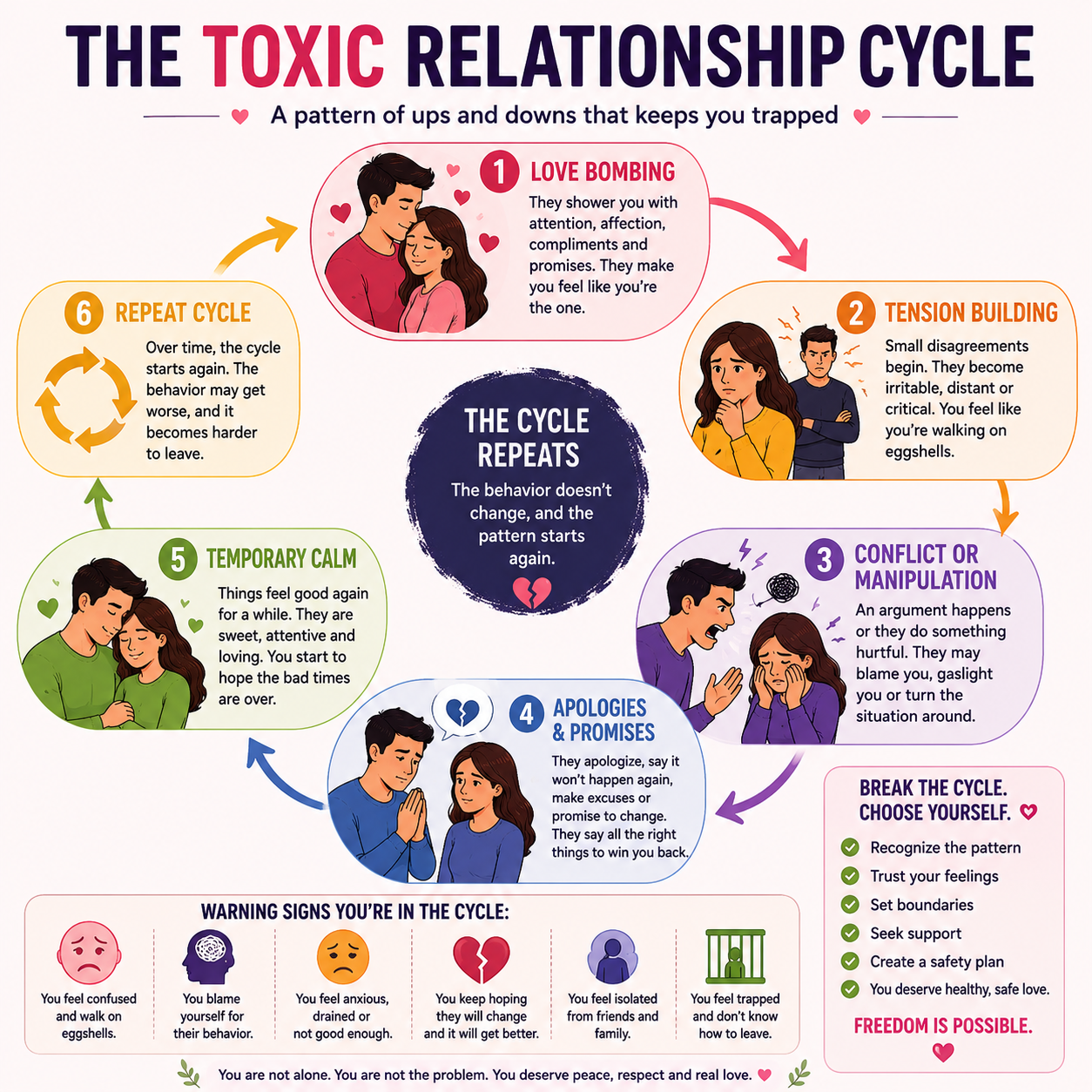
A toxic relationship is one where the dynamic is harming one or both partners physically, mentally, or emotionally. Instead of supporting each other, valuing each other, or respecting each other, one or both partners feel confused, drained, or exhausted as time goes on.
In a healthy relationship, both partners help make sure each other’s overall well-being is healthy and strong. In toxic relationships, however, there’s an imbalance where one partner might take on more than they give, or the relationship might become about criticism, control, or emotional instability.
Toxic vs. Difficult Relationships
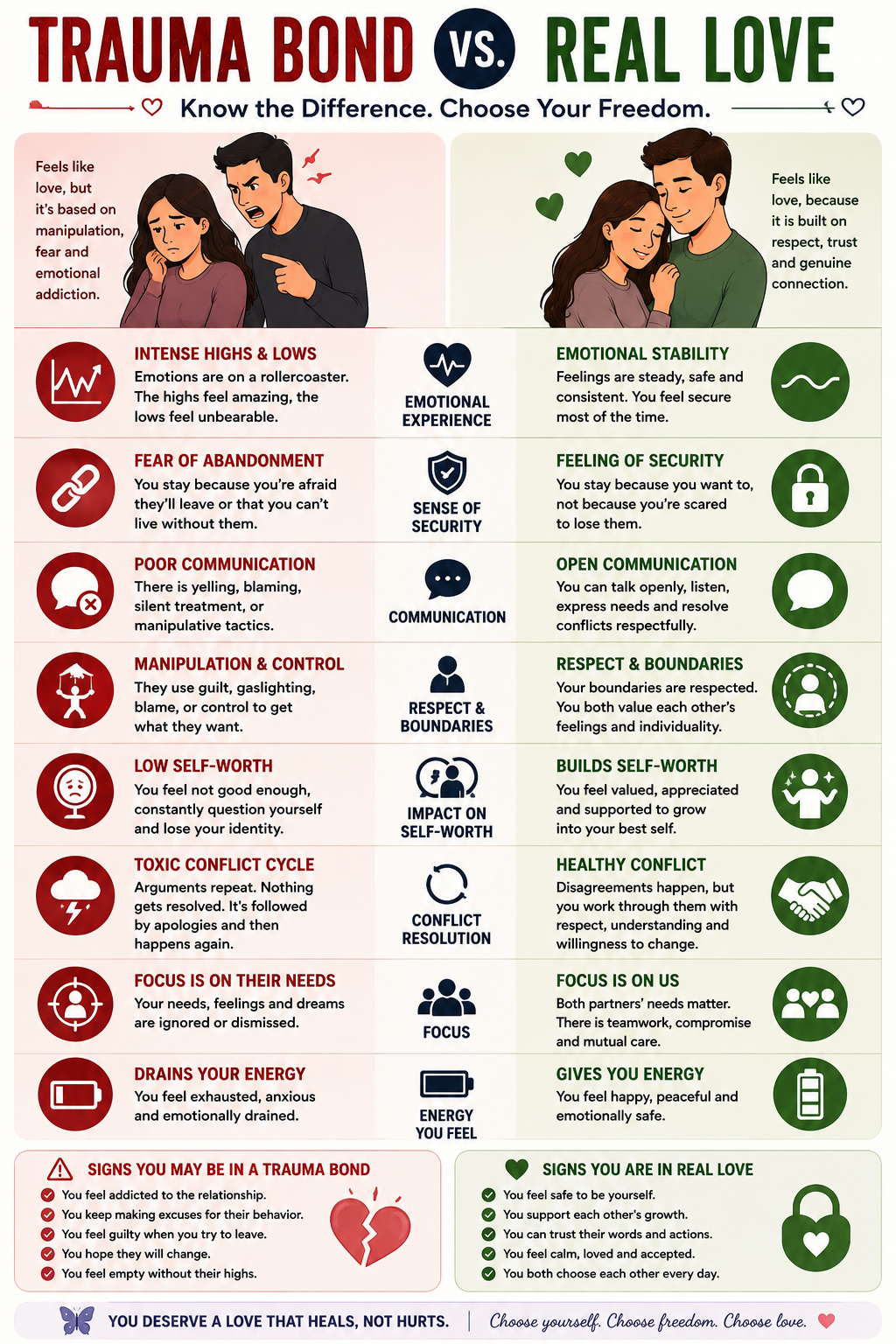
It’s important to understand that all relationships go through challenges, and not all challenging relationships mean they’re toxic. Some relationships go through hard periods, especially during times of change or extreme stress.
A difficult relationship can look like:
- Occasional conflict or misunderstandings.
- Space for communication and resolution.
- An effort from both partners to improve the relationship.
A toxic relationship can look like:
- Repeated harmful behaviors without wanting to change.
- Lack of accountability.
- Not willing to grow.
- Ongoing emotional distress or instability.
Seeing the difference can help you to decide if your relationship has the potential to grow and improve, or if there are deeper issues that are seen.
Common Signs of a Toxic Relationship
Here are some common signs of a toxic relationship:
Lack of Support
In a toxic relationship, one partner may stop the other from being independent or discourage outside connections. This might feel small at first, with a subtle comment or a request, but it can eventually lead to reduced contact with friends and family.
As time goes on, this kind of isolation can make it harder to get the support or perspective that you might need. You might start relying more on your partner for emotional validation, which makes you more dependent and makes it harder for you to get away from the relationship if needed.
Toxic Patterns
Communication in a toxic relationship usually becomes unproductive, negative, or emotionally damaging. Conversations might include defensiveness, avoidance, emotional shutdown, or criticism.
Instead of being able to fix these issues, these patterns can go into conflict, or the problems might just be unresolved. As time goes on, this creates a communication environment where one or both partners feel misunderstood, constantly on edge, or unheard.
Jealousy and Controlling
When there’s jealousy in a toxic relationship, it goes beyond insecurity. This can often lead to controlling behavior, such as questioning your decisions, limiting your independence, and watching your actions.
At first, these behaviors might seem like concern or care, but they often create a place where one partner feels restricted or pressured. This can lead to stress, less confidence, and a loss of personal freedom.
Manipulation and Control
Manipulation can look like different things, such as:
- Guilt tripping.
- Distorting the situation.
- Shifting responsibility.
- Gaslighting.
As time goes on, this can cause you to question whether your experiences or thoughts are true. You might start to doubt your judgment or feel responsible for problems that are not entirely your own.
Types of Toxic Partners and What They Can Do to You
Not every unhealthy relationship looks the same. Sometimes the patterns are subtle at first, but over time, they start to affect how you feel, think, and show up in your own life.
Types of Toxic Partners
This partner constantly points out what’s wrong—whether it’s your choices, your personality, or small things that shouldn’t matter.
It might start off as jokes or “helpful comments,” but over time, it can wear down your confidence and make you question yourself.
Using Guilt
This person has a way of making you feel responsible for how they feel.
You might notice:
- Feeling guilty for things that aren’t really yours to carry.
- Changing your behavior just to avoid upsetting them.
Over time, this creates an imbalance and quiet resentment.
Playing a Victim
This partner avoids taking responsibility by always turning the situation around.
Instead of owning their part, they:
- Blame you.
- Act misunderstood.
- Make it hard to actually solve anything.
This creates a cycle where nothing ever really gets resolved.
Focusing On Their Own Needs
This is the partner who focuses mostly on their own needs and perspective. You may feel like:
- Your feelings aren’t fully heard.
- Your experiences don’t matter as much.
Over time, this creates distance and imbalance in the relationship.
Physical Effects of Stress
Stress doesn’t just stay emotional, but it can affect your body, too. You might notice things like:
- Trouble sleeping.
- Feeling run down or constantly tired.
- More stress-related symptoms are showing up.
When stress becomes constant, your body feels it.
Emotional and Mental Impact of Toxic Relationships
Toxic patterns can slowly change how you feel about yourself. Common experiences include:
- Ongoing anxiety or stress.
- Feeling emotionally drained.
- Lower self-confidence.
- Questioning yourself more than you used to.
Over time, this can affect how you see yourself and how you approach future relationships.
Creating Distance from Those Around You
Sometimes, toxic relationships create distance between you and the people around you. This can happen because:
- You feel emotionally exhausted.
- You’re dealing with pressure inside the relationship.
- You don’t have the energy to stay connected to others.
That distance can make things feel even more isolating.
Pay Attention to Your Own Feelings
Sometimes the clearest signs show up in how you feel. You might notice:
- Feeling anxious before or after seeing them.
- Holding back what you really want to say.
- Feeling like you have to be careful all the time.
- Doubting your own thoughts or reactions.
Those feelings usually point to something deeper going on.
Boundaries Matter
Boundaries are the limits you put in place to protect your well-being. They help you decide:
- What you are okay with.
- What you are not okay with.
- How you allow others to treat you.
What Healthy Boundaries Do
Healthy boundaries help to create things like:
- A stronger sense of self.
- More respect in the relationship.
- Better emotional balance.
- Clear expectations between both people.
Without them, unhealthy patterns tend to continue.
How to Set Boundaries
Boundaries aren’t about controlling someone else, but they’re about protecting yourself. That can look like:
- Saying clearly what you need.
- Following through when something crosses a line.
- Taking space when necessary.
It’s about changing what you allow, not forcing someone else to change.
Getting Support When Needed
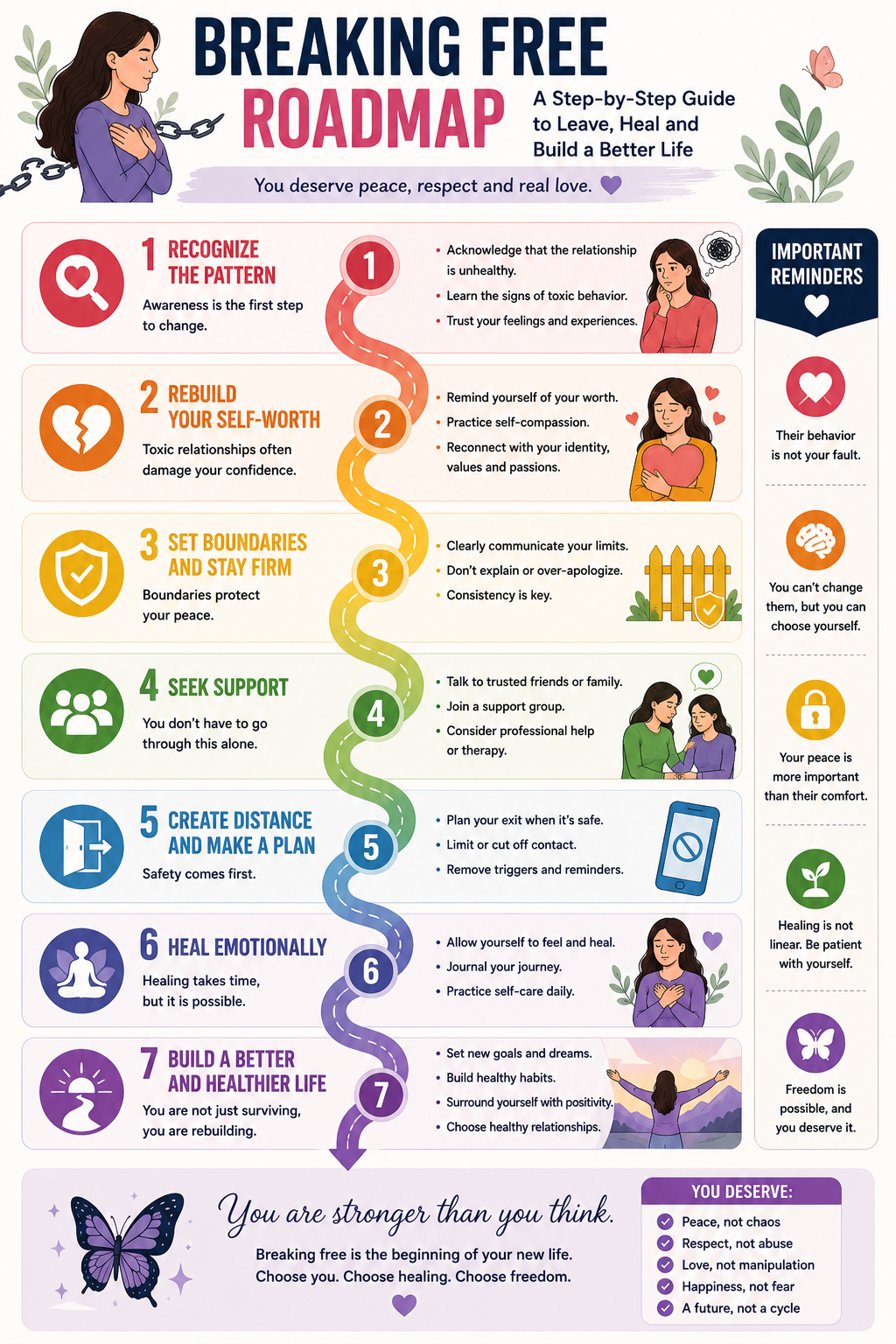
If both people are open to improving things, outside support can make a big difference. Talking to a professional can help:
- Identify patterns that keep repeating.
- Improve how you communicate.
- Start rebuilding trust in a healthier way.
Toxic relationships don’t always start out obviously. A lot of times, the patterns build slowly over time. Paying attention to how you feel, setting boundaries, and being honest with yourself are the first steps toward change.
You deserve a relationship that creates support, respect, and emotional balance—not one that leaves you feeling drained or unsure of yourself.
When It’s Better to Leave a Relationship
A relationship that has repeated harm, fear, or no willingness to change might be one where it’s healthier to leave. Even though this can be a hard situation, putting your own well-being first is important.
Healing After a Toxic Relationship
Healing starts with understanding what you went through. By looking at the patterns, you can get clarity and avoid repeating the same dynamics in future relationships.
Finding a Support System
Find people that you can connect with who give positive support. Strengthen these connections so that you can have balance and emotional stability in your life.
Restoring Your Own Identity
Take time to discover who you are outside the relationship. Focus on things such as:
- Your individual goals.
- Your overall emotional well-being.
- Your personal interests.
These things will help to rebuild your confidence and help you to grow as an individual.
Finding Healthier Relationships
Knowing what a healthy relationship is can help you find these types of relationships instead of getting stuck in a loop. Healthy relationships are built on communication, respect, and mutual support. This kind of relationship allows both partners to:
- Grow together.
- Have independence.
- Express themselves openly.
- Feel safe.
- Feel valued.
By being able to recognize these toxic patterns, you’re not failing, but you’re creating a place where you can have healthier connections.
Final Thoughts: The Power of Toxic Relationships
Toxic relationships can impact your physical and emotional well-being. By recognizing these types of relationships, you can take a step towards change. Make sure that you’re setting boundaries, focusing on personal growth, and seeking support so you can move towards healthy and balanced relationships.
The goal isn’t to just leave your toxic relationship behind, but it’s to build connections that help to support your overall well-being, sense of self, and growth.
Frequently Asked Questions
1. What defines a toxic relationship?
A toxic relationship is a relationship where one or both people repeatedly feel controlled, drained, disrespected, unsafe, manipulated, or emotionally diminished.
2. What are the most common signs of a toxic relationship?
Common signs include constant criticism, jealousy, gaslighting, control, emotional withdrawal, blame shifting, disrespect, manipulation, and feeling anxious instead of secure.
3. Can a toxic relationship start out feeling loving?
Yes. Many toxic relationships begin with strong affection, attention, and excitement before patterns of control, conflict, or emotional instability slowly appear.
4. What is the toxic relationship cycle?
The toxic relationship cycle often includes love bombing, tension building, conflict, apologies, temporary calm, and then the same hurtful pattern repeating again.
5. What is gaslighting in a toxic relationship?
Gaslighting happens when someone makes you question your memory, emotions, judgment, or reality in order to avoid responsibility or gain control.
6. Why is it hard to leave a toxic relationship?
It can be hard to leave because of emotional attachment, fear, hope that things will change, lowered self-worth, financial pressure, shared responsibilities, or trauma bonding.
7. What is a trauma bond?
A trauma bond is an unhealthy emotional attachment that can form through repeated cycles of hurt, apology, hope, and temporary affection.
8. How do I know if it is love or a trauma bond?
Love usually feels safe, respectful, and steady. A trauma bond often feels addictive, confusing, fearful, unstable, and difficult to leave even when the relationship hurts you.
9. Are all toxic relationships abusive?
Not every toxic relationship fits the same pattern, but repeated control, intimidation, emotional harm, threats, or fear-based behavior should always be taken seriously.
10. Can a toxic relationship become healthy?
Change is possible only when both people take honest responsibility, respect boundaries, stop harmful patterns, and commit to consistent long-term growth. One-sided effort is not enough.
11. What should I do first if I think I am in a toxic relationship?
Start by recognizing the pattern, trusting your feelings, documenting what happens, talking to someone safe, and thinking carefully about what support you may need.
12. How do I set boundaries in a toxic relationship?
Set clear, simple boundaries about what behavior you will not accept. Stay consistent, avoid over-explaining, and get support if the other person reacts with pressure or anger.
13. Should I tell my partner I am leaving?
That depends on your safety. If the person may react aggressively, controlling, or unpredictably, it is better to speak with trusted support or a professional before making a plan.
14. How can I safely leave a toxic relationship?
Create a practical plan, gather support, protect important documents, arrange a safe place if needed, limit contact, and prioritize your emotional and physical safety.
15. Is no contact helpful after leaving a toxic relationship?
No contact can help many people heal by reducing emotional confusion, pressure, manipulation, and the urge to return to an unhealthy cycle.
16. What if I still miss the person after leaving?
Missing someone does not mean the relationship was healthy. It often means your heart is adjusting to the loss, the routine, and the emotional attachment.
17. How long does healing from a toxic relationship take?
Healing is different for everyone. Some people feel relief quickly, while others need more time to rebuild confidence, trust, identity, and emotional peace.
18. How can I rebuild self-worth after a toxic relationship?
Rebuild self-worth by reconnecting with supportive people, practicing self-compassion, setting small goals, rediscovering your interests, and reminding yourself that mistreatment was not your fault.
19. When should I seek professional help?
Consider professional support if you feel trapped, fearful, depressed, isolated, overwhelmed, or unable to make decisions about the relationship on your own.
20. What does a healthy relationship feel like after toxic love?
A healthy relationship feels more peaceful, respectful, honest, consistent, and emotionally safe. You should feel free to be yourself without fear, pressure, or control.